To dispatch this team please call 800-GET-HELP (1-800-468-4357)

A CISM (Critical Incident Stress Management) team is a group of trained professionals who help people cope after traumatic or highly stressful events.
In simple terms:
We provide emotional support, education, and resources to help individuals and groups process what happened and return to healthy functioning.
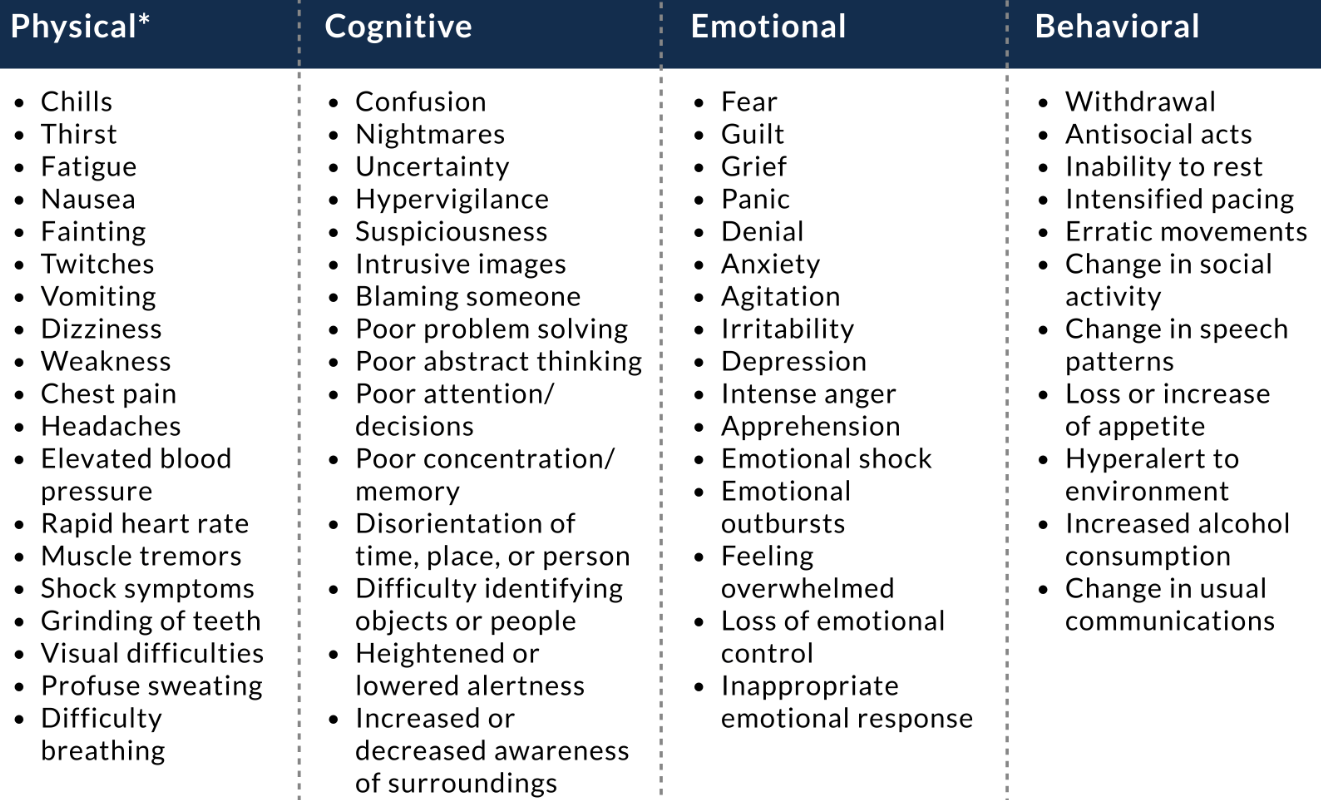
You have experienced a traumatic or critical incident—an event that can cause strong emotional or physical reactions. Even after the incident is over, it is common to experience stress responses immediately or days, weeks, or even months later.
These reactions are normal and vary from person to person. They may last for a short time or longer, depending on the event and the support available. With understanding and support from family, friends, or peers, symptoms often improve.
Sometimes an incident is so overwhelming that help from a trained professional is needed. Seeking support is not a sign of weakness—it simply means the experience was significant and support can help with recovery. To dispatch this team please call 800-GET-HELP (1-800-468-4357)

If you have questions about the team, you can email cism@rsnwo.org or contact the team at 419-782-9920 x 1014 and leave a message.
Confidential Services provided at no charge include:
| Suggested reasons to activate the team/request services:
|
The information shared during these activations is confidential as the the team and its members are covered under ORC 2317.023
ORC § 2317.023 establishes a testimonial privilege for certain peer support communications in Ohio. That means:
Peer support team members (including CISM team members) are protected from having to testify in court about:
What was said to them by someone receiving peer support services
Any advice they gave to that person
— as long as the conditions in the statute are met. Ohio Laws
This protection applies to communications that happen in the context of peer support or crisis response services provided after exposure to stress, trauma, or critical incidents, as defined by the law. Ohio Laws
The statute defines who can be a peer support team member, and it includes:
First responders (peace officers, firefighters, EMS workers)
Dispatchers and corrections officers
Civilian employees and qualified retirees
These individuals, when trained and part of an organized team, are covered under this privilege. Ohio Laws
Under ORC 2317.023:
A team member cannot be compelled to testify in legal proceedings about confidential communications from a person they supported. Ohio Laws
This helps keep peer support conversations confidential and safe, encouraging honest sharing without fear of that information ending up in court.
The privilege does not protect disclosures when:
There is a clear and present danger to the person or others (e.g., imminent risk of harm).
The person consents to allow testimony.
The person later voluntarily testifies about the matter.
The information is not related to the support relationship.
The communication relates to a criminal act. Ohio Laws
This means if someone is in danger or willing to share their own information publicly, the team member might be allowed or required to testify.
To maintain this privilege, team members must get ongoing training. For most peer support roles, that’s at least eight hours of basic peer support training every two years. Ohio Laws
We provide confidential peer support to first responders following traumatic or high-stress events. Our goal is to help responders understand stress reactions, process critical incidents, and return to healthy functioning. Only first responders who are on the team will respond to these call-outs; no community members will take part.
Immediate peer support from trained responders
Defusings and debriefings after critical incidents
Stress education and coping strategies
Confidential support protected under Ohio law (ORC 2317.023)
Referrals to professional resources when needed
Law Enforcement • Fire • EMS • Dispatch • Corrections • Emergency Support Personnel
Not therapy • Not disciplinary • Not investigative • Not administrative
If your agency or personnel have experienced a critical incident, support is available.
📞 To request CISM services:
Contact the team at 419-782-9920 x 1014 and leave a message.
Requests may be made by:
Agency leadership
Incident command
Supervisors
Peer support coordinators
Early support helps reduce long-term stress and strengthens responder resilience.